
Burn out – Recently, news outlets covered the World Health Organisation’s decision to list ‘burn out’ as a disease, giving global recognition to the concept from 2020.
‘So…what’s the problem with this?’ is an obvious and legitimate question to ask.
The concept of burn out is in itself not problematic. A lot of people reading this will have experienced, at some point in their life, a period when they’ve been working really hard and juggling work and outside life to the point where they really need a break or a change. This is a perfectly natural and understandable process.
As human beings, we are not designed to work without rest or recuperation and, if you don’t posses the mental health skills to manage stress and pressure correctly between holidays or time off, then feelings of overwhelm, anxiety and depression are natural and predictable outcomes, and have been throughout humanity.
But, with the highlighting of burn out as a ‘chronic condition’ the WHO are medicalising something that can’t be measured or accurately assessed. They are offering a mental health diagnosis that is largely a social judgement on someones’s coping skills in relation to their work and life in general.
Someone suffering from the symptoms that loosely form the basis of the WHO’s concept of burn out is already likely to feel out of control in their life. They will feel stressed and anxious around their work and home activities.
So, when you offer a medicalised burn out diagnosis, this might, at first, seem like a positive move.
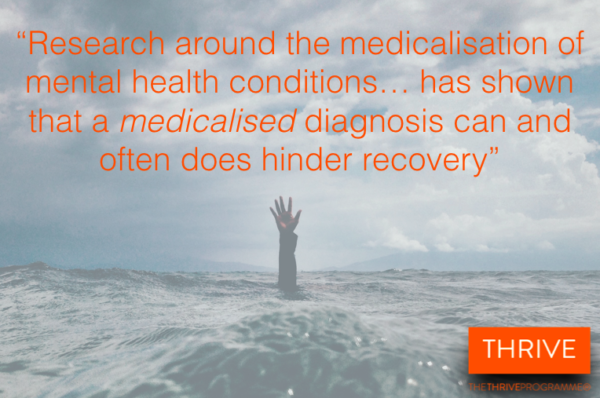
However, research around the medicalisation of mental health conditions such as anxiety, depression and phobias has shown that a medicalised diagnosis can – and often does – hinder recovery.
This is because the diagnosis gives the condition power and control over that person. They will give over a significant of agency for that part of their life over to the fact that it’s now an internationally-recognised ‘chronic’ disease and something they can do little to control without the aid of medication, long-term therapy or counselling.
And when people feel even more out of control in relation to their mental health, or reliant on medication or long-term counselling to manage their emotional responses, they rarely overcome this life hurdle in a healthy, productive way.
Someone who’s medicated their way out of ‘burn out’ may be able to return to work but they will have done little to address the root causes of the problem or improve their ability to maintain good mental health.
So, what could someone suffering from the symptoms of ‘burn out’ do to improve their mental health without resorting to medication or therapy?
Through The Thrive Programme’s work with people suffering from anxiety, stress, depression, emotional issues and unhelpful thinking styles, we know the power of helping people understand how their mental health works and how to manage it in their work and personal lives.
The concept is simple: rather than trying to medicate or put a sticking plaster on the issue, we offer the individual insight into how and why they are feeling like they do.
And when someone understands how their mental health works and how to manage it, they have power over conditions such as burn out. That power leads, inevitably, to recovery and long-term improvements in mental health, coping skills and stress management.
Goodbye burn out.
If you know someone suffering from poor mental health, what can you do to help?
Our specialist, non-medicalised course has been used worldwide for several years with great success in helping people overcome issues such as stress, depression, anxiety, phobias and disorders. It’s the best go-to option for helping anyone, no matter their background or level of education, improve their mental health.
Available in book form or one-to-one with a Thrive Programme Coach®, the Thrive Programme course takes just a few weeks and is a highly effective way of teaching anyone how to be mentally healthy without the use of medication or therapy.
Everything is easy-to-understand, straight-forward and backed by research and evidence. There is also a Thrive In Business course for businesses to help inoculate their employees against stress and poor mental health.
Contact us today or message the team on Facebook to learn more and sign up for a free initial consultation. Burn out.
